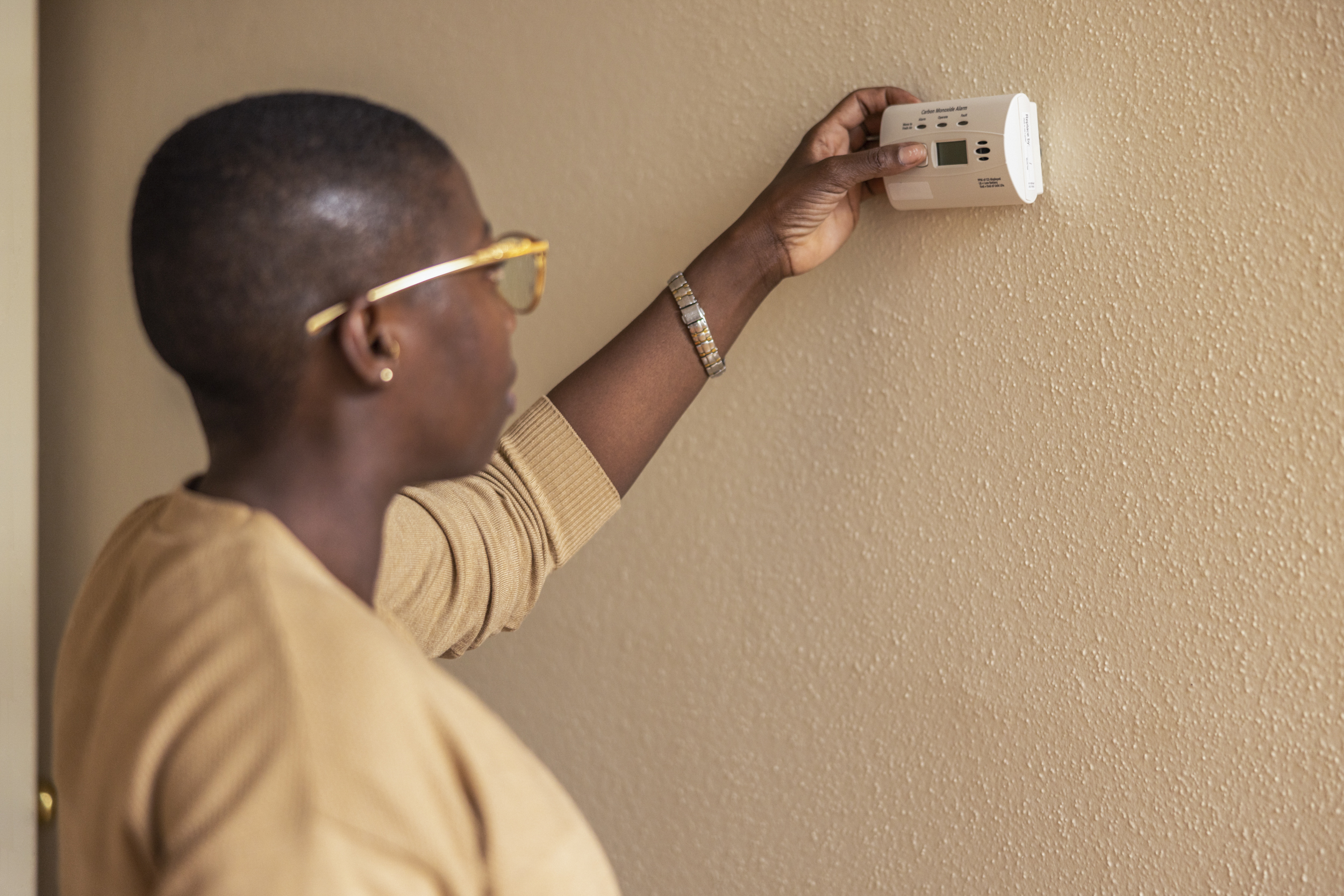
Montgomery County Fire and Rescue Service wants homeowners to know that smoke alarms and carbon monoxide alarms don't sound the same, and that the distinction could save their lives.
In a public safety advisory posted Monday, MCFRS reminded residents that smoke alarms produce a three-beep pattern while carbon monoxide alarms produce a four-beep pattern.
The department's guidance is the same for both: evacuate and call 911 from outside. Telling the dispatcher which alarm activated helps crews arrive prepared. Carbon monoxide incidents require air-monitoring equipment that isn't standard on every engine.
The reminder comes after two house fires displaced 11 people in Montgomery County in recent days.
Recent fires underscore the message
In Gaithersburg, a lightning strike hit a single-family home in the 9200 block of Warfield Road between 4:30 a.m. and 5 a.m. Sunday. The family of five didn't discover the fire until around 7 a.m., when they smelled smoke and heard their smoke alarms activate. They escaped and found the entire roof ablaze, then called 911. The fire caused an estimated $850,000 in damage and displaced three adults and two children, according to WTOP. No one was injured.
At approximately 5:16 a.m. Monday, crews responded to the 14800 block of Maydale Court in Silver Spring's Cloverly area. A man woke up, smelled smoke in his bedroom and saw fire in the bathroom. He roused the other five occupants. All six people and a cat escaped without injury. About 55 firefighters responded. MCFRS spokesperson David Pazos confirmed the details to Bethesda Magazine. The cause remains under investigation, and the family is receiving Red Cross assistance.
"Behind every smoke alarm replaced is a safer home," Fire Chief Corey Smedley said.
What Bethesda homeowners should know
MCFRS recommends smoke alarms in every bedroom, outside each sleeping area, and on every level of the home. Units should be replaced every 10 years and tested monthly by pressing the test button.
Montgomery County law has required carbon monoxide alarms in most single-family homes, townhouses and two-family dwellings with a fuel-burning appliance, fireplace or attached garage. Those alarms must be installed outside sleeping areas and on every level.
Carbon monoxide is odorless and invisible. Symptoms of exposure include headache, dizziness, weakness and nausea.
Residents who hear any alarm should leave the home immediately and call 911 from outside. To reach MCFRS, call (240) 777-2441.