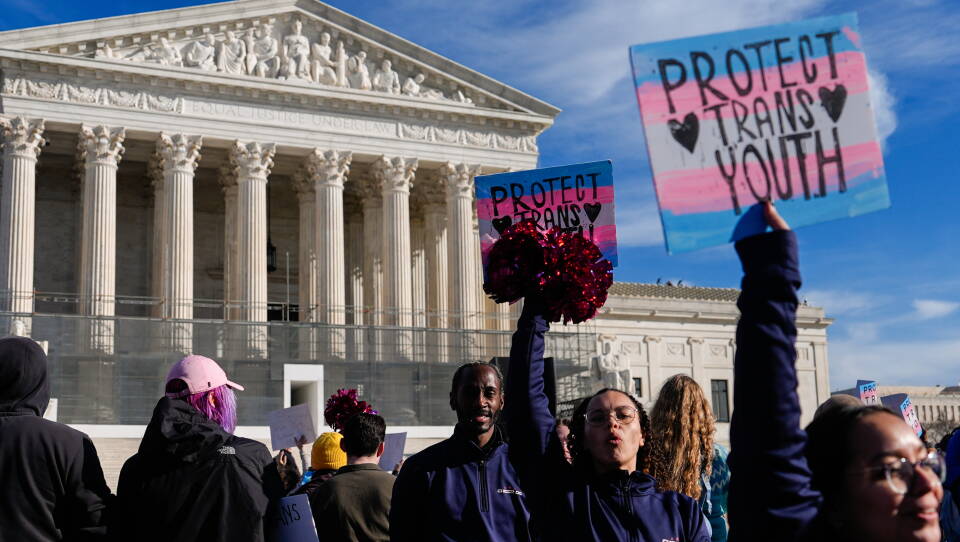
One week after a federal civil rights investigation was launched into Montgomery County Public Schools (MCPS), the Supreme Court ruled in favor of allowing states to ban transgender girls from female sports.
The 6-3 decision in West Virginia v. B.P.J. and Little v. Hecox on June 30 does not force Maryland to change anything. However, it arrives one week after the U.S. Department of Education's Office for Civil Rights opened a Title IX investigation into MCPS, Frederick County and Prince George's County school systems for allowing transgender students to use bathrooms and play on sports teams consistent with their gender identity. That investigation launched Tuesday, June 23.
As of Thursday, neither MCPS nor the Maryland State Department of Education had provided updates on the federal probe, according to Maryland Matters.
What the court said
Justice Brett Kavanaugh, writing for the majority, held that Title IX permits schools to separate sports teams based on biological sex. The ruling upheld bans in West Virginia and Idaho, and 27 states now have similar laws on the books.
Justice Sonia Sotomayor, in dissent, wrote that the majority "will let a state deny those benefits to transgender athletes because it 'thinks they have an inherent athletic advantage, even if the facts show that they do not.'"
The court did not impose a nationwide ban. Maryland's transgender-inclusive sports policies remain intact.
Maryland lawmakers split
Del. Kathy Szeliga (R-Baltimore County) and state Sen. Mary Beth Carozza (R-Lower Shore) announced plans on Tuesday to reintroduce the Fairness in Girls' Sports Act during the 2027 legislative session. The bill would bar transgender girls from junior varsity and varsity teams.
Del. Kris Fair (D-Frederick), chair of the Maryland Legislative LGBTQ+ Caucus, said he plans to introduce legislation strengthening protections for transgender people. Fair said the court's ruling determined that sports policymaking is best left to the states and does not require Maryland to change any protections.
Maryland Attorney General Anthony Brown condemned the ruling in a June 30 statement, noting that Maryland has not adopted a ban on transgender youth in athletics.
What's next for MCPS families
MCPS has not commented publicly on the ruling or the federal investigation. The Board of Education's next business meeting is Thursday, July 16, followed by one on Thursday, August 20. No agenda items related to transgender sports policy have been confirmed for either date.
The federal investigation remains open. The Office for Civil Rights has not announced findings or required policy changes from the district.
One Maryland family's experience
The same legal landscape applies to transgender student athletes across Maryland, including in MCPS. In Annapolis, Nicholas and Daniella Knight had just signed up their 11-year-old transgender daughter, Gabi, for the girls' soccer team after years of her playing on boys' teams. Then their local league emailed to say Gabi cannot play because she was not born female.
"She was excited about the possibility of how this was going to be," Daniella Knight told Maryland Matters. "But now she's thinking 'Do I even want to continue to play if they tell us that I have to play with the boys?'"
Statewide, approximately 12,900 transgender youth ages 13 to 17 live in Maryland, about 3.2% of the state's youth population, according to the Williams Institute at UCLA.