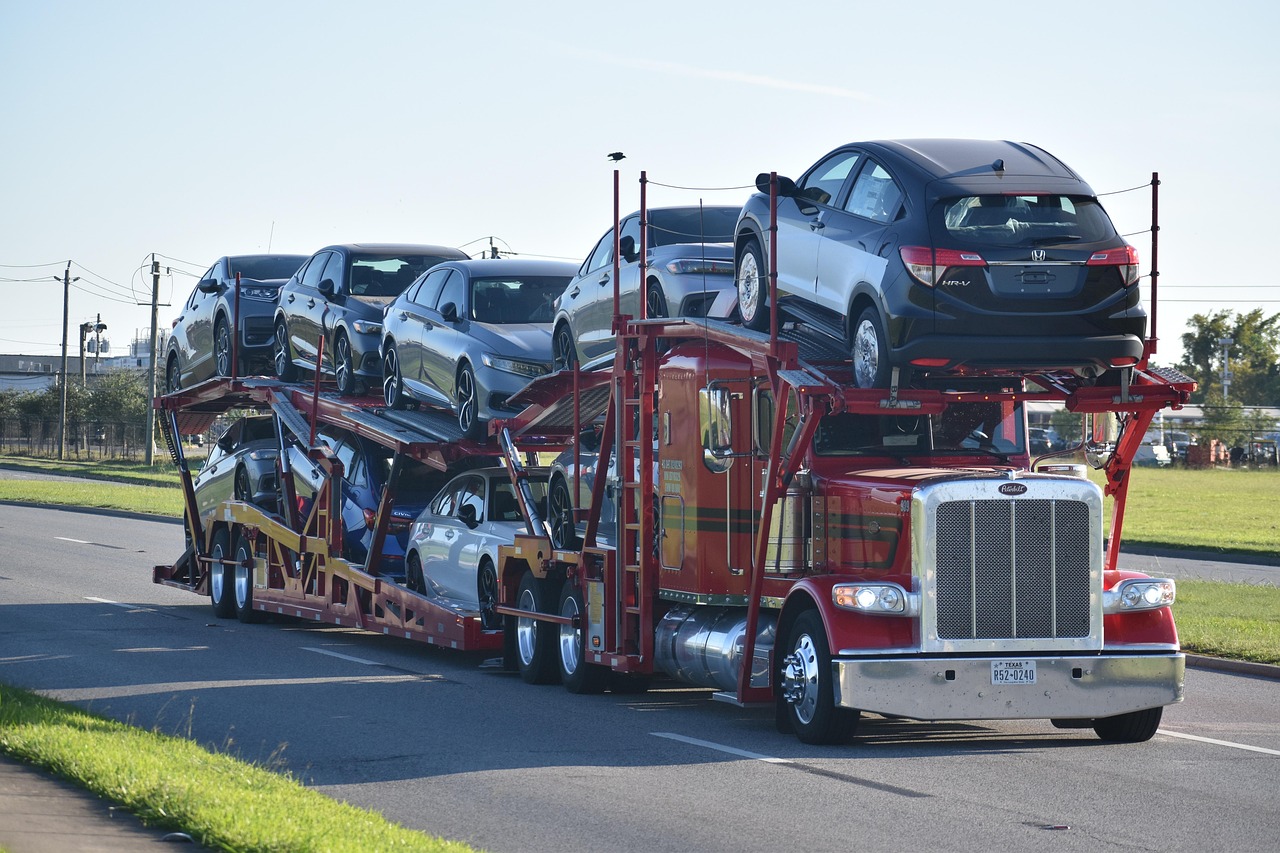
Independent car haulers serving Virginia, Maryland, and nearby states have raised rates $10 to $50 a vehicle this year as diesel stayed above $5 a gallon, adding cost to every used car before it reaches a lot.
Jason Christenbury, who co-owns Performance Auto Carrier Inc. with his wife, absorbed the higher diesel bills for a while, figuring the fuel spike wouldn't last.
But it did.
“I ate it for a month to six weeks,” Christenbury said. “Because I thought it was going to be temporary.”
Now his Chesapeake, Va., company, which operates three trucks serving routes throughout Virginia and North Carolina, charges about $10 to $20 more to haul each car.
Diesel prices have taken car haulers on a punishing ride in 2026. A gallon that averaged $3.48 nationally in early January climbed to $5.64 by April, retreated to $4.67 in late June, surged to $6.53 in September and stood at $5.94 on Nov. 16, according to the U.S. Energy Information Administration (EIA).
While a November decline brought some relief, diesel remained more than $2 a gallon above its level a year earlier.
Regional prices varied considerably. EIA figures for the week of Nov. 16 put diesel at $6.31 in the Central Atlantic region, which includes Maryland, and $5.54 in the Lower Atlantic region, which includes Virginia.
For car dealers, the volatility is drawing attention to an expense that consumers rarely see itemized: getting a used car from the wholesale auction to the dealership. A winning bid is only the beginning. Transportation, auction fees and repairs must be factored into what a dealer can afford to pay—and whether a particular vehicle is even worth buying.
Fuel does not account for every dollar a vehicle transporter charges. Drivers, insurance, equipment financing, maintenance and the ability to fill a trailer all influence the price. A transporter who isn't hauling a full load has fewer paying vehicles to offset its operating expenses.
In May, Central Dispatch, a Cox Automotive vehicle-shipping marketplace, reported that average transportation prices in a sample of its marketplace orders had risen from roughly 75 cents per mile earlier in the year to more than 90 cents.
Even at those higher rates, carriers were still picking up part of the extra diesel bill, according to Central Dispatch.
Christenbury told Surround Sound News that Performance Auto Carrier’s tractor-trailers average roughly 4.2 miles per gallon, including idling. He tries to fill the trailer to its nine-car capacity rather than making trips with six, seven or even eight cars. On longer routes, such as the trip to Statesville, N.C., he charges $30 per car.
Wholesale buyers feel the pinch, too
The impact is visible on the buying side of the industry as well.
Hamid Yazdani of McLean, Va., once owned A & H Imports, a high-volume dealership in Fredericksburg, and still buys and sells vehicles wholesale. He said the transporter he has used for 26 years asked for a rate increase in August as diesel costs kept rising.
They negotiated a $25-per-vehicle increase in shipping costs between two locations in Cox Automotive's Manheim wholesale auction network: Manheim Baltimore-Washington in Elkridge, Md., and Manheim Fredericksburg in Stafford County, Va.
Yazdani believes the increase would have been substantially greater without his longstanding relationship with the transporter.
Now semi-retired, Yazdani remains active in the wholesale business largely to stay engaged with the industry. And while the increase may seem modest on a single vehicle, for a dealership purchasing 20 vehicles at a time, it amounts to another $500 in transportation expenses before a single car reaches the sales lot.
’We were losing money’
Danny Barrett, who runs Barrett Transport with his father in Unionville, Va., has faced similar pressures. The four-truck business serves dealerships between Richmond and Baltimore, with Danny managing two of the trucks. He said he's had to increase his rates by $25 to $50 per vehicle, depending on the destination.
Barrett said he absorbed higher diesel costs for about two months before passing along the increase, hoping prices would stabilize and reluctant to burden longtime customers. With his trucks averaging roughly four miles per gallon, shouldering the added expense alone eventually became unsustainable.
“You want to keep your customers happy and try to do the best you can,” Barrett said. “It got to the point where, I mean, basically we were losing money.”
Barrett said keeping his trucks loaded has also become more challenging. He described making stops at four dealerships to collect just five vehicles, an example of the additional time and effort required to make the runs worthwhile.
The financial pressures extend to both sides of the transaction. Dealers can bid less at auction, accept smaller profit margins or look for inventory closer to home. Transporters face a similar dilemma: raise their rates and risk losing customers, or absorb higher expenses and accept smaller profits.
The growing significance of shipping costs has not gone unnoticed. In October, Cox Automotive announced the addition of Central Dispatch transportation estimates to Manheim vehicle listings, allowing dealers to compare shipping costs before making a purchase.
Diesel prices projected to drop in 2027
Some relief may be ahead, although diesel is expected to remain costly.
In its November forecast, the EIA projected that the national annual average diesel price would fall from $5.25 a gallon in 2026 to $5.03 in 2027.
For Christenbury, uncertainty extends beyond individual trips. He said he even declined delivery of a $409,000 rig he had ordered, choosing not to expand his equipment commitment in an unpredictable market.
Jamie Haase is a Virginia-based journalist covering public policy, the environment, wildlife, energy, and technology. His work has appeared in The Virginian-Pilot, HuffPost, Carolina Journal and Horse & Hound, among other outlets.
Distributed exclusively by Surround Sound News